Revenue Options to Fund Our Future
Stop Tax Cuts for the Wealthy
SB 3125, signed into law as Act 24 on May 21, 2026
estimated savings over the next five years (initial projections)
Read the SB 3125 FAQIn total, all of the changes in SB 3125 could save Hawaiʻi an estimated $680 million over the next five years (according to initial projections). This revenue will be crucial for preserving the common goods in our state budget—priorities like Medicaid and SNAP. Here are a few of the specific provisions in the bill:
- Halts planned income tax cuts for the highest-income households.
- Preserves the income tax cut schedule from Act 46 (2024) for joint filers under about $350,000 in income, heads of household under about $262,500, and single filers under about $175,000.
- Adds a new marginal tax rate of 13 percent on high-income single filers earning over $500,000 and married couples earning over $1 million.
The 2026 proposals
Estimated revenue from each proposal the coalition tracked during the 2026 session. Only SB 3125 passed.
Bars show each bill’s estimate during the session. SB 3125 was amended before it passed; the final version (Act 24) is projected to save about $680 million over five years.
Stop Tax Cuts for the Wealthy
The State passed huge tax breaks with Act 46 in 2024, and the top 1% of taxpayers would have benefited the most. SB 3125 halts those planned cuts for the highest-income households and adds a new 13% rate on the very top earners.
Tweak the Conveyance Tax
Luxury homes and second homes should be taxed at higher rates when they’re sold. This proposal would make the conveyance tax lower for middle-class Hawaiʻi residents, while making it higher for the ultra-wealthy.
Tax Wealth Like Work
Income from investments should not be taxed at lower rates than income from regular work. This proposal would tax capital gains fairly, at the same rate as ordinary income from a job.
Millionaire’s Income Tax
Tax on income over $1 million. The State’s top 1 percent can afford to pay more to help secure our state’s future.
Closing the Real Estate Investment Trust Loophole
REITs make millions of dollars off real estate but pay no corporate income tax to our state.
Other priorities
Wealth Proceeds Tax
Investors should be fairly taxed on all of their income from investments, including passive income.
2026 Coalition Priorities
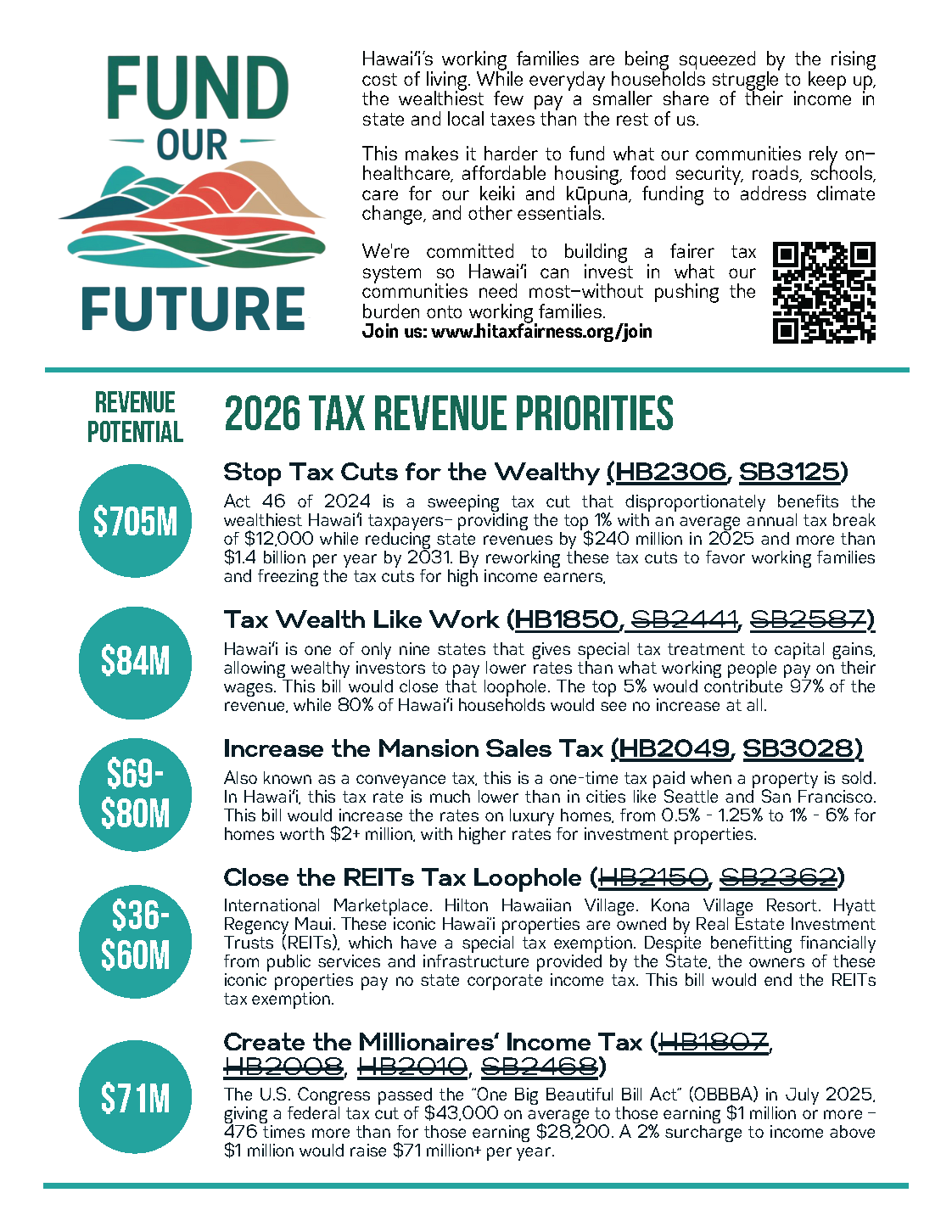
2026 Messaging Guide