Column: Protecting Hawaii’s future demands pause on tax cuts
Protecting Hawaiʻi’s future demands pause on tax cuts
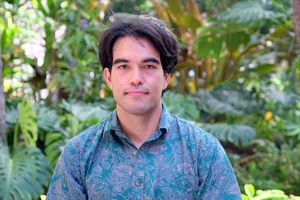
Governor Josh Green and Will White, Executive Director of Hawaiʻi Appleseed Center for Law & Economic Justice
The recent article “Green seeks to halt tax cuts,” presented our state’s critical fiscal decision as a simple subtraction from family budgets. This frames the issue backward. In the face of severe and unpredictable federal cuts, the plan to pause future state income tax cuts isn’t a forfeit of savings; it’s a responsible safeguard for the very foundations of our community.
The federal government, under the Trump Administration’s H.R.1 budget, is already giving up to $44,000 per year in federal tax breaks for the top one percent of earners. To pay for these tax breaks, the federal government is poised to rip hundreds of millions of dollars from Hawaiʻi’s economy, targeting lifelines like Medicaid and SNAP – programs over 400,000 of our neighbors rely on. The notion that we should proceed with additional state tax cuts while the federal safety net is being shredded is not just irresponsible, it’s a direct threat to our most vulnerable.
We have lived this story before and bear the scars today. During the Great Recession, state revenue shortfalls led the Lingle Administration to push for deep, lasting cuts to education, public health and social services. A generation of students felt the impact of those cuts in overcrowded classrooms and reduced resources. Our homelessness crisis was exacerbated and our capacity to care for kūpuna and keiki diminished.
We cannot afford a repeat. Yet, H.R.1’s provisions — which could strip 56,000 people of Medicaid and add tens of millions to the state’s share of SNAP costs — guarantee a worse outcome unless we act with prudence now. Moreover, the federal government uncertainty has contributed to a $4 billion decrease in the Council on Revenue’s state general fund revenue projections, leading the state to make difficult choices.
This crisis demands we make bold decisions about Hawaiʻi’s future. Once fully implemented, the tax cuts will cost the state $1.4 billion annually. Meanwhile, mandatory state costs for pensions, retiree health benefits and debt service continue to climb.
Failure to act now will force an impossible choice: inflict deep wounds on essential services, or pass the bill to our children through more state debt. Instead, the proposal for a full pause is the sober, wise decision this moment demands. It recognizes that in a crisis, preserving our capacity to care for our community is the highest priority.
Importantly, Governor Green’s proposal does not undo the tax relief families are already receiving. It preserves a historic level of tax relief currently in effect under Act 46 across all income levels, returning approximately $1.5 billion to Hawaiʻi families this year and $5.4 billion over the next five years.
What it does do is pause additional scheduled tax cuts, allowing the state to preserve roughly $1.8 billion in general fund revenues by the end of fiscal year 2031.
Of those preserved funds, the proposal directs about $600 million toward targeted, refundable tax credits that provide direct relief to low-income households and working families — those most impacted by rising costs and vulnerable to the loss of federal support. One of these tax credits will triple the child and dependent care tax credit for certain taxpayers with a federal adjusted gross income of $150,000 and below. This can drastically reduce childcare expenses for working families and make Hawaiʻi a more affordable place to live.
The choice is not between good options, but between hard ones. We cannot continue to cut income taxes when it guarantees devastating budget shortfalls for our schools, healthcare and infrastructure once federal funds disappear. Instead, let us take a prudent pause and preserve the funds we need, to ensure we can keep our promises to the elderly, our keiki and our future.
Doing so is the fairest, most responsible and most compassionate approach to the challenges created by the federal budget cuts. These are funds we have already committed to food security programs, child care subsidies and maintaining the public infrastructure — from schools to hospitals — that every family, worker and business depends upon.
These public investments form the bedrock of economic opportunity and stability. Tax policy is not an abstract exercise; it is the means by which we pay for the shared goods — quality education, affordable healthcare, safe communities and a sustainable environment — that allow everyone to thrive. This is the larger, more fundamental promise: that Hawaiʻi will not sacrifice the health and stability of its people on the altar of a rigid tax schedule.
The federal landscape has changed drastically. Our fiscal plan must adapt with courage and clarity. Pausing is the smart, compassionate and necessary step we must take to ensure that in a time of federal retreat, Hawaiʻi does not retreat from its people.